AI Is Changing What Counts as Intellectual Property

Maksim Markevich
July 14, 2026
I’ve spent the last decade building software for the AEC industry, and more recently for energy infrastructure — solar PV, battery storage, data centers, and engineering optimization.
One topic comes up in almost every technology company I work with: intellectual property.
Software companies protect their source code.
Engineering consultancies protect their methodologies.
EPC contractors protect their estimating models, construction know-how, and productivity rates.
Manufacturers protect their product designs and manufacturing processes.
For a long time, I assumed the software industry’s definition was the right one. If you build software, surely the source code is your biggest asset.
Lately, though, I’ve started to think we’re witnessing a fundamental shift.
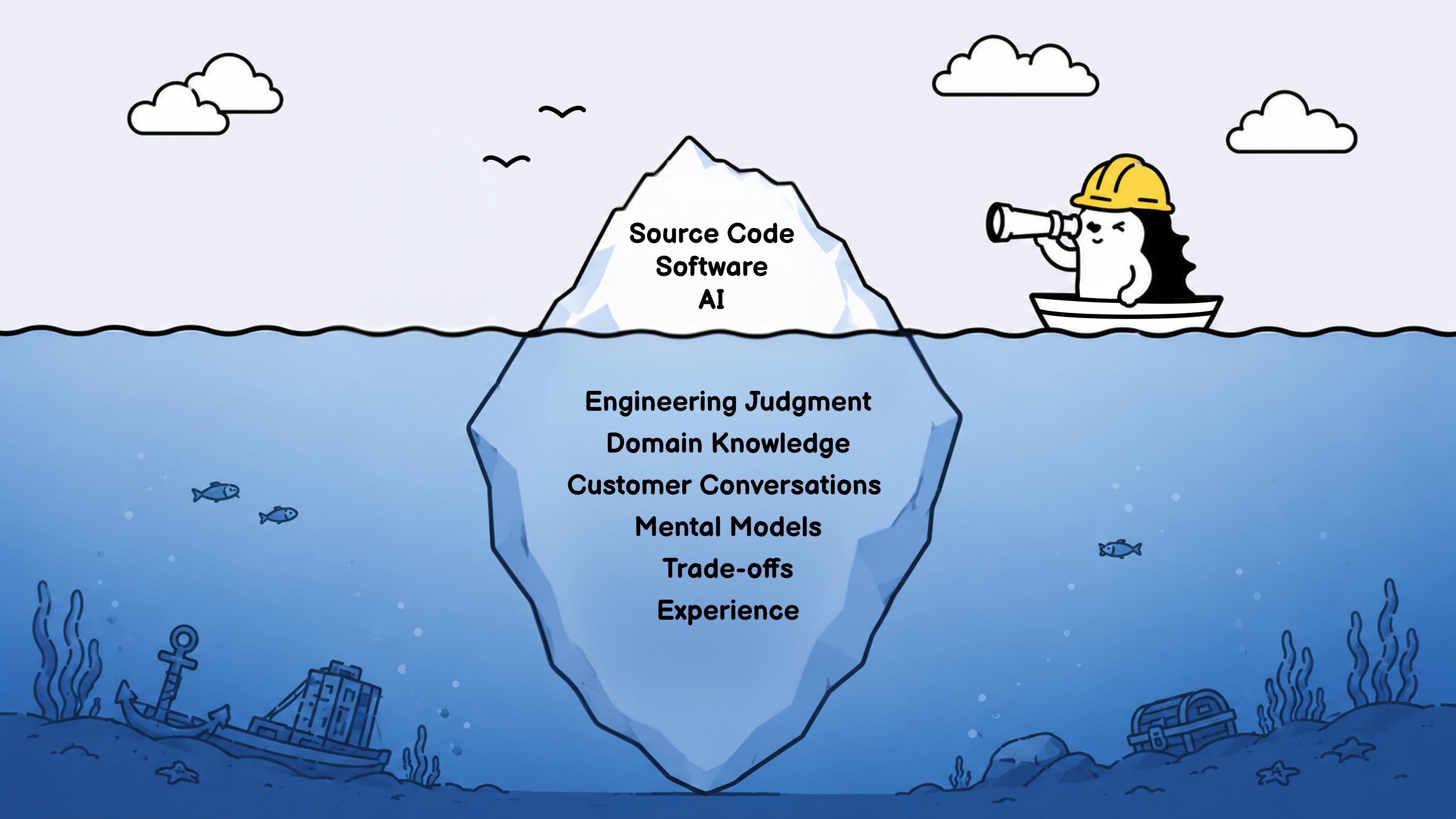
AI has fundamentally changed the economics of information.
Finding standards, specifications, research papers, documentation, and examples has never been easier.
Writing software is changing too. Building reliable production systems is still a serious engineering discipline, but generating code itself is becoming increasingly accessible.
Information is becoming cheaper.
Implementation is becoming cheaper.
The bottleneck is moving somewhere else.
What remains difficult isn’t finding information.
It’s knowing what matters.
Which requirements are actually important?
Which constraints are real?
Which trade-offs are worth making?
How do engineers actually solve this problem — not how we imagine they do?
Those answers rarely exist in documentation.
They come from years of experience, hundreds of customer conversations, reviewing real projects, testing assumptions, making mistakes, and gradually building engineering judgment.
That’s incredibly difficult to copy.
This became very tangible while building our latest Battery Energy Storage System (BESS) configurator.
We invited around 45 companies into our beta program.
Today we have more than 120 active beta users, and over the last few months we’ve spent hundreds of hours talking to developers, EPCs, engineers, system integrators, and owners.
Every conversation was recorded.
Every conversation was transcribed.
But we didn’t stop there.
We built an internal system around those conversations.
The transcripts are linked together.
We built custom AI agents that extract recurring themes, identify hidden needs, create empathy maps, and connect product ideas back to the people who inspired them.
Today, when we decide to build a new feature, we can usually trace that decision back to real customer conversations.
That made me realize something.
We weren’t just building software.
We were building two assets at the same time.
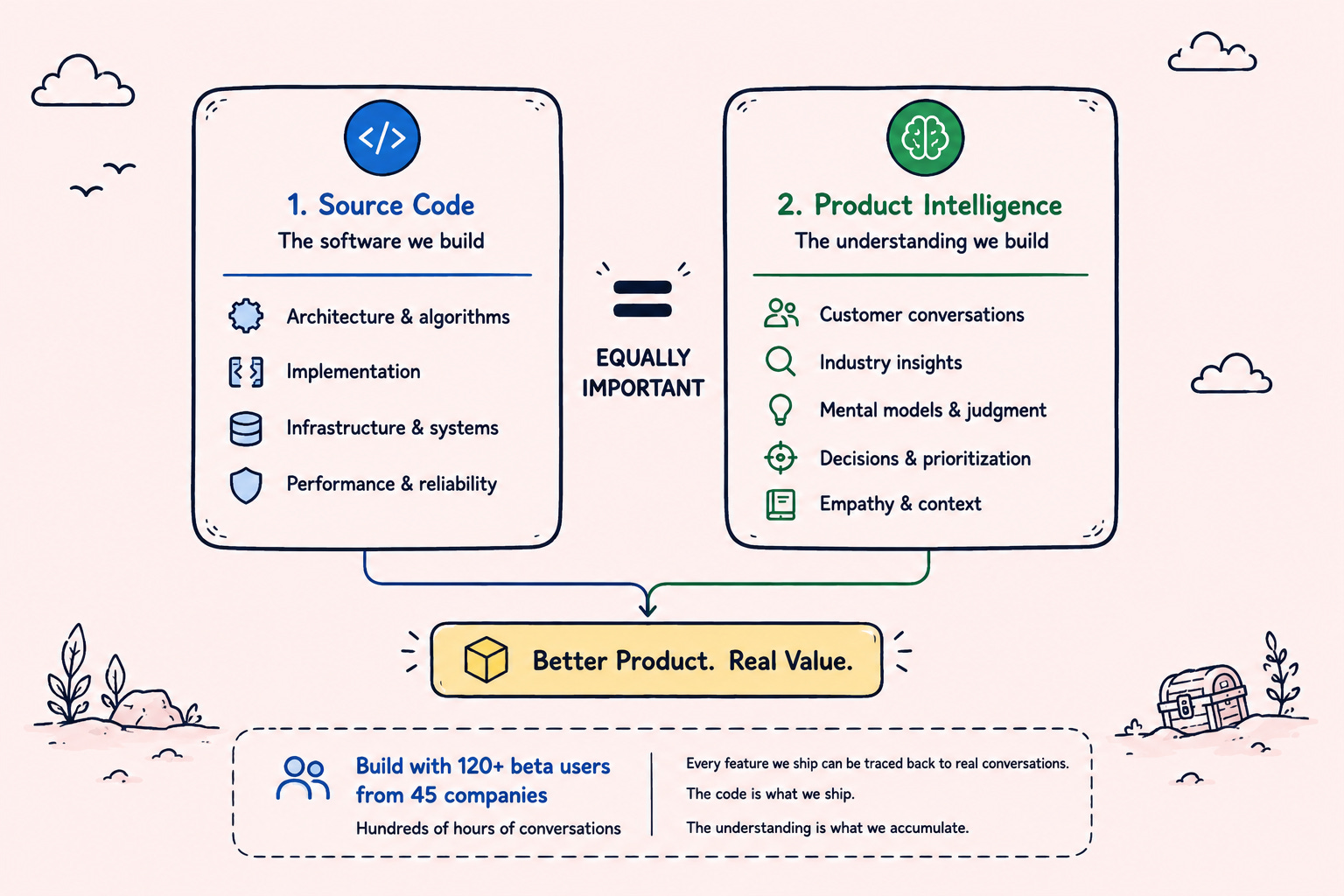
The first asset is what we ship.
The second asset is what guides everything we ship.
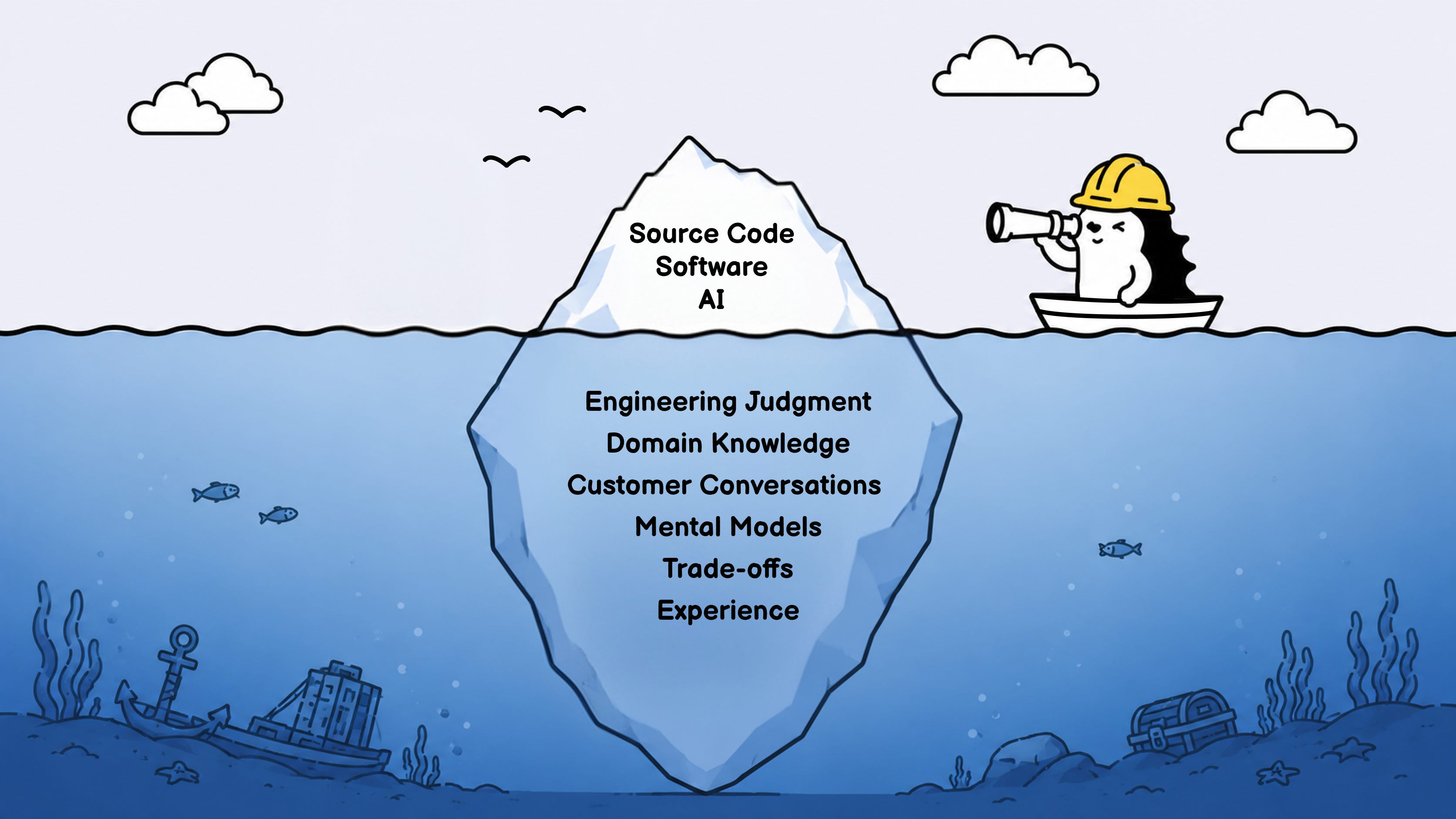
The code is visible.
The understanding is mostly invisible.
But I no longer think one is more valuable than the other.
In fact, building the second asset may have been the harder part.
This experience completely changed how I think about software.
I no longer believe the most valuable asset is the source code.
The source code is simply the implementation of something much larger.
The real asset is the understanding that produced it.
The accumulated conversations.
The engineering judgment.
The mental models.
The intuition for what should be automated, what should remain manual, and where software genuinely creates value.
You can copy code.
You can generate code.
You can even reproduce features.
What you can’t easily reproduce is the understanding that led to those decisions.
I think AI is quietly changing what creates competitive advantage.
Less about proprietary information.
Less about proprietary code.
More about proprietary understanding.
Software will continue to become easier to build.
Information will continue to become easier to access.
But engineering judgment still has to be earned.
Maybe that’s becoming the most valuable intellectual property of all.

Whether you're a developer, architect, or contractor, we'll help you put design automation to work. Let's talk.
Get in Touch